
Monthly Archives: June 2017

Meeting of June 27, 2017

Bob Burch on “California in the Civil War: Other California Units”
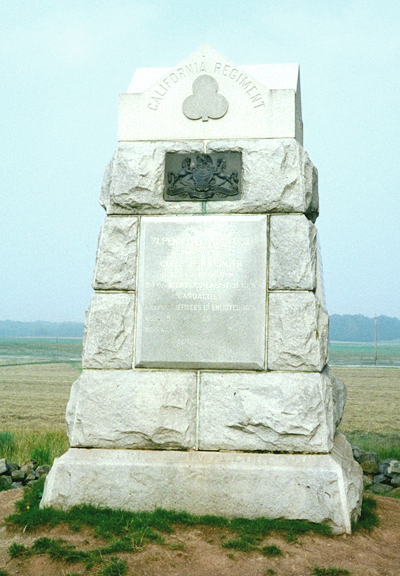
This is the fifth of a twelve-part series on California and the American Civil War. This presentation will explore the history of those units that served in the Eastern Theater during the American Civil War that enlisted a good portion of their recruits from California or had that state’s name in their unit designation. Nearly ten percent of Californians who volunteered during the war did so into units from other states. They did so for a variety of reasons including the desire to represent their state during the war to preserve the Union. Consequently these “other California units” represented their state continuously from the Battle of First Bull Run until General Lee’s surrender at Appomattox four years later.

Eventually Californians served in five other states’ volunteer regiments. On the West Coast these units were the 1st Washington Territory Infantry and 1st Oregon Cavalry Regiments. On the East Coast these were the 32nd New York Infantry Regiment (aka “California Regiment”), Baker’s Brigade (aka “California Brigade”) of four regiments, and the 2nd Massachusetts Cavalry Regiment’s “California Hundred” and “California Battalion”.

Along the way we will meet several forgotten Californians who served their country well. Colonel Roderick Matheson from Healdsburg who fought at First Bull Run and later died from wounds received at the Battle of Crampton’s Gap. Colonel Francis Pinto of San Francisco who commanded regiments during the Peninsula, 2nd Manassas, Fredericksburg and Chancellorsville Campaigns. Major Archibald McKendry who commanded the California Battalion and eventually the 2nd Massachusetts Cavalry Regiment when only a captain. Captain James Sewell Reed of the California Hundred who died while leading his unit against Mosby’s partisans and Captain Hugh Armstrong who replaced him and led that company from Battle of Fort Stevens until Appomattox. And Captain Henry Crocker of San Francisco who participated in nine battle and was awarded the Congressional Medal of Honor for valor at the Battle of Cedar Creek.

Except for the “CAL 100” Cavalry, these units have disappeared from history despite the presence of the California Regiment’s monument on Cemetery Ridge at Gettysburg and mention in many original source documents from newspapers to the Official Records. This presentation will attempt to remember and honor their contribution to the Union cause.

Bob Burch is a native Californian, born and raised in Santa Clara County. He is also a lifetime student of the Civil War. He had the opportunity to visit many Civil War sites from Florida to Pennsylvania to New Mexico during his 30 year military career. Like many California CWRT members, he desires to understand his home state’s role in the war. He started collecting material for this presentation ten years ago and initiated a serious study 15 months ago. This series documents his research in great detail. Time allows only a few key points from each slide to be presented. Numerous period photographs and magazine drawings are included for visual effect with the intent of comprehending California’s role in the Civil War.
Meeting Minutes June 2017

Tom Roza’s Civil War Novel Published

Here is an announcement from our group secretary, Tom Roza:

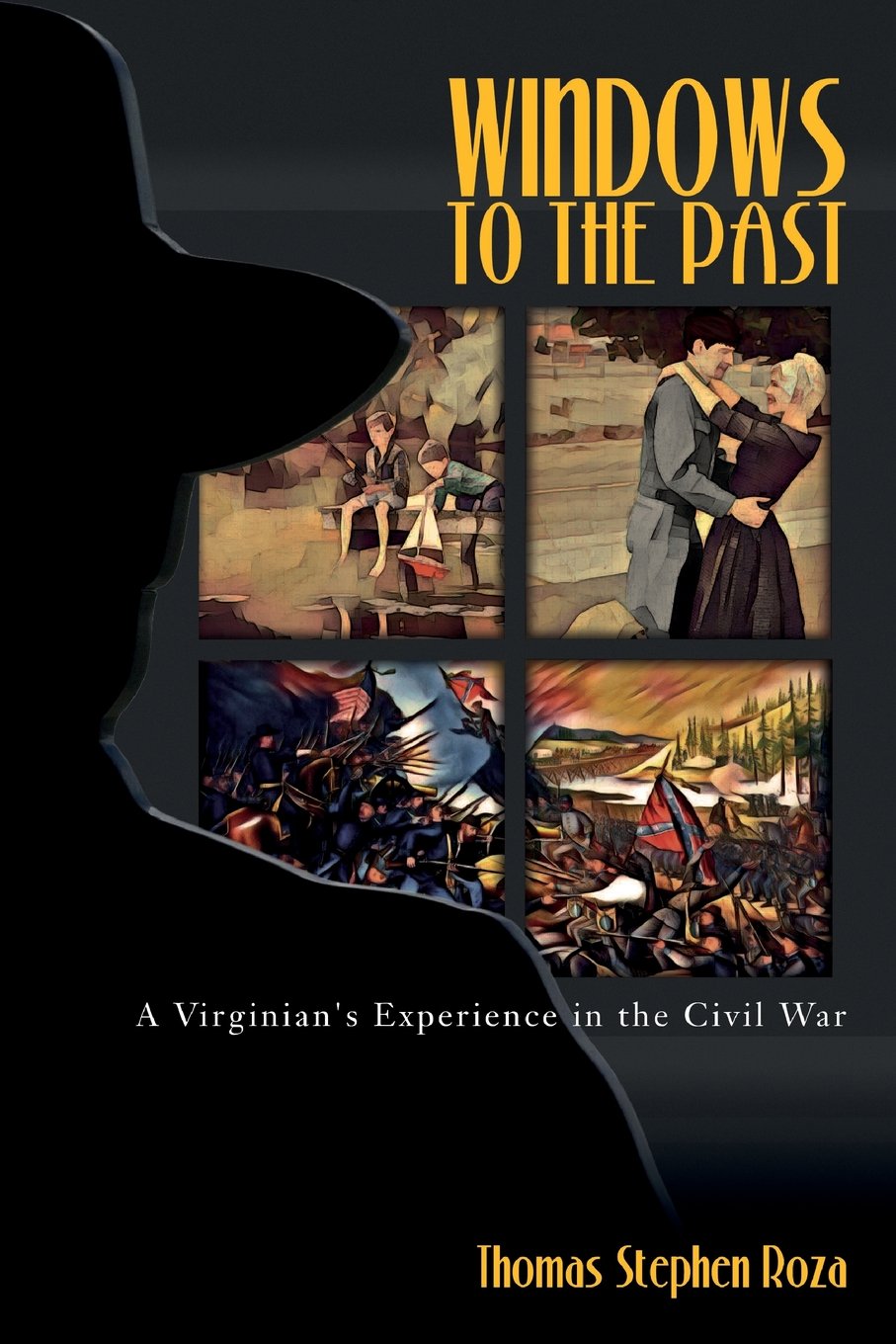
It is with great pleasure and deep humility that I announce that my historical novel on the American Civil War entitled Windows to the Past: A Virginian’s Experience in the Civil War is now available on Amazon.com!

I have been a student of the American Civil War since 1960. I have conducted extensive research on this great conflict and toured numerous battlefields to see firsthand where millions of Americans fought our Civil War. But, through my over 50 years as a student of this significant event, it was not the battles, not the politics, and not the armaments that piqued my interest – it was the people; the everyday men and women from all parts of the country that dealt with and/or fought for what they believed in. And, those brave young soldiers on both sides that found the indescribable courage to give their lives for the values that made them who they were.

Windows to the Past is the story of one man’s journey through one of the most turbulent, yet fascinating periods in the history of our Country. The main character’s life story, told to his great-granddaughter, embraces all the meaningful periods of his life from childhood through to his twilight years as he searches for the answer to the question: “Did I make a difference in the lives of the people I touched and loved?”

I would be honored if you considered purchasing my novel. Here is a link to the listing: Amazon.com.

Or, once you are in the Amazon.com web site, you can enter the title ““Windows to the Past: A Virginian’s Experience in the Civil War”.

I pray that my storytelling efforts regarding family, friends, dealing with conflict, and finding peace of mind in some small way resonates with you as the reader.

Tom

PS: An electronic version has been developed in conjunction with Amazon.com and is now available. Purchasing this version of my novel will allow readers to use a variety of handheld devices (Kindles, smart phones, etc) . Here is a link to the electronic version: Amazon.com

Quiz for June 27, 2017

Civil War Quiz: What Do You Know About the Post War Era and Reconstruction?

Q#1 – On May 2, 1865, still-president of the Confederacy Jefferson Davis held a Council of War in Abbeville, South Carolina. What was the purpose of this meeting and what was its outcome?

Q#2 – What was the estimated amount of debt incurred by the Southern States by the end of the war?

Q#3 – Southern Negroes were given a promise regarding their ability to own land on former plantations where they had worked as slaves. What was the name of this promise?

Q#4 –What name did President Andrew Johnson give to his post war plan for the nation? He did not call it Reconstruction.

Q#5 – In the years immediately following the Civil War, Southern legislatures began to pass discriminatory laws designed to preserve white supremacy. What were these laws called?

Q#6 – In response to President Andrew Johnson’s pro-Southern bias regarding his plans for treatment of the South specifically as it related to Negroes, Radical Republicans crafted and were successful in getting what amendment added to the US Constitution?

Q#7 – What was the most significant effect of the Reconstruction Act of 1867 passed over President Johnson’s veto?

Q#8 – During the first years of the Reconstruction period, approximately how many US soldiers were stationed in the South to enforce martial law?

Q#9 – What was the name given by the pro-Democratic Party newspapers for the state constitutional conventions held in 1867 throughout the South?

Q#10 – Through the various Reconstructions actions initiated by Radical Republicans to enable blacks to obtain elected political office, what Southern state was the first to elect a black person as Governor during Reconstruction?

Q#10 – How many articles of impeachment were filed against President Andrew Johnson in 1868? What were the three topics that the articles dealt with?

Q#12 – In the presidential election of 1868 won by Ulysses S. Grant, who was the Democratic Party’s candidate?

Q#13 – The Ku Klux Klan is the best known organization that used terror tactics against blacks. What was the name of the News Orleans-based organization that adopted similar terrorist tactics against blacks?

Q#14 – In the Spring of 1871, Congress passed the Enforcement Act in response to growing acts of terror by white supremacist groups in the South. What powers did this Act give President Grant ?

Q#15 – What was the last southern state to be readmitted to the Union?

2017 West Coast Civil War Round Table Conference

The 2017 West Coast Civil War Round Table Conference has been announced. Sponsored by Sacramento Civil War Round Table, this year’s theme is

Lesser Known Civil War Battles
November 10–12, 2017, Crowne Plaza Hotel, Sacramento

Download the flyer and registration form: 2017 West Coast Conference Flyer

The speakers will be:

  • William C. Davis: Retired in 2013 as Professor of History and Executive Director of the Virginia Center for Civil War Studies at Virginia Tech University. He is the author or editor of more than 60 books on the Civil War and Southern history, and consultant and commentator for A&E’s “Civil War Journal,” and several other television and film productions.
  • Dr. Brian S. Wills: Director of the Center for the Civil War Era at Kennesaw State University. Dr. Wills is a nationally recognized Civil War historian and author of books on Civil War topics.
  • Thomas Cartwright: Is a leading authority and author on the Battle of Franklin who conducted tours of Western Theater battlefields for 20 years. Appeared on many TV shows and is a frequent CWRT speaker.
  • Jim Stanbery: Professor of Political Science and History at Los Angeles Harbor College, and speaker at the West Coast Civil War Conference for more than twenty years. Is a frequent CWRT speaker.
  • Theodore Savas: Is an attorney, adjunct college instructor, award-winning author, Partner and Managing Director of Savas Beatie LLC. He specializes in military history and the American Civil War.
  • Ron Perisho: A member of the Sacramento CWRT and Center for Civil War Photography (CCWP), CoEditor of “Gettysburg in 3-D,” and a Soils Engineer who has collected Civil War Photography for 30 years.