
Meg Groeling on “The Aftermath of Battle: The Burial of the Civil War Dead”
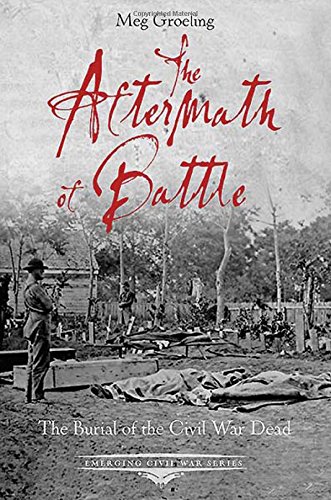 Meg’s presentation was a book talk about The Aftermath of Battle, her volume in the Emerging Civil War series, published by Savas Beatie. She presented a series of short discussions about the stories within the covers, such as the contribution of Dr. Jonathan Letterman to the advancement of military medicine, how TAPS came to be—and came to be played for military funerals—and the evolution of embalming and mortuary science to ensure the safe transport of remains from the battlefield to home, wherever that was. Aftermath looks at many different “aftermaths,” and the good (or bad) that came from so much injury and death. Things we take for granted today, like photojournalism, military cemeteries, veteran’s care, amputation and reliable prostheses, and forensic science—all began during or after the American Civil War. From the first Union Army officer death—Colonel Elmer Ellsworth—to the last surviving Civil War veteran—Albert Woolson—Aftermath covers these and almost everything in between. Understanding what every soldier risked is what speaks to the heart of military history. Whether wearing blue or gray, firing a gun or a cannon, being a prisoner or a submariner, or even simply hauling supplies or carrying the general, each had an aftermath. Meg’s book honors them all.
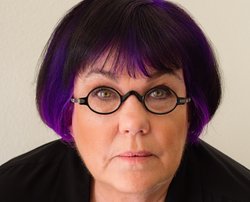 Meg Groeling currently teaches math at Brownell Middle School, named for E. E. Brownell, a California educator who was named for Colonel Elmer Ellsworth and is related to Corporal Francis Brownell, the man who shot the man who killed Ellsworth. She has also taught at other public schools in California and Maryland. She contributes to World At War and Strategy and Tactics, history and war-gaming magazines. Her undergraduate degree in Liberal Studies with a minor in American History was from California State University, Long Beach, and she will receive her Masters degree in History, with a Civil War emphasis, in January 2016.
Savas Beatie published her first book, The Aftermath of Battle: The Burial of the Civil War Dead, in the fall of 2015. This is a volume in the Emerging Civil War Series, although it differs from the others in that it takes on a much broader range of subjects. The book has received excellent reviews.
She has also written First Fallen: the Life and Times of Colonel Elmer Ellsworth, the only biography written about Ellsworth since Ruth Painter Randall’s, published in 1960. In it, she challenges some of the assumptions made about Ellsworth and uses his life as a lens through which to view the attitudes and events of the urban North prior to the Civil War. Southern Illinois Press has picked it for publication sometime within the next two years.
She is a regular contributor to the blog Emerging Civil War, exploring subjects beyond the battlefield such as personalities, politics, and practices that affected the men who did the fighting.