
Robert Burch on “California in the Civil War: Background and Military Situation in April 1861”
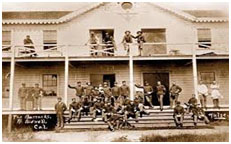 California’s involvement in the American Civil War remains one of the great hidden facets of that conflict. Yet it is rich by the value of its unique contribution to the Union war effort and resemblance to national trends throughout that period. Background and Military Situation in April 1861 was the first of a five-part series concerning California and the war. This series considers all aspects of the state’s involvement from a military perspective. Subsequent presentations discuss Californian U.S. Volunteer Units, U.S. Navy in California, Military Bases in California, Famous Californian Generals, Military Operations and Aftermath (1861-66). This is a fresh reevaluation of an old subject utilizing new material available on the Internet supplementing numerous traditional original and secondary sources. This series reveals that our pre-war history is more complex and wartime contribution is greater than generally appreciated.
Background and Military Situation in April 1861 put these wartime experiences into perspective by highlighting key economic, military and political events within California leading up to the war. Discussion started with a condensed military history of Spanish and Mexican California culminating in the Mexican-American War of 1846. Initial political divisions and U.S. military presence in California begins in this period. Next, discussion led to the state’s political history before the war. This revealed that California entered the Union as an anti-slavery state in 1850, but strong Southern influence moved the state into the “pro-slavery” camp by 1860 as part of the Southern national agenda to defend slavery. Finally, the state’s military situation in April 1861 was highlighted. The U.S. Army, U.S. Navy, California State Militia, and Secessionist Militia were each individually summarized. Special attention was given to the obscure Santa Clara County state militia and the secessionist militia companies. This revealed that while pro-Southern politics became dominate by 1860, it was also a “house of cards” as its leadership and most-radical followers fled the state after Fort Sumter and Union patriotism blossomed in April 1861.
This topic is of special interest to the author. Bob is a native California, born and raised in Santa Clara County. He is also a lifetime student of the Civil War. He had the opportunity to visit many Civil War sites from Florida to Pennsylvania to New Mexico during his 30 year military career. Like many California CWRT members, he desires to understand his home state’s role in the war. He started collecting material for this presentation ten years ago and initiated a serious study 15 months ago. This series documents his research in great detail. Time allows only a few key points from each slide to be presented. Numerous period photographs and magazine drawings are included for visual effect with the intent of comprehending California’s role in the Civil War.